The impact of misinformation
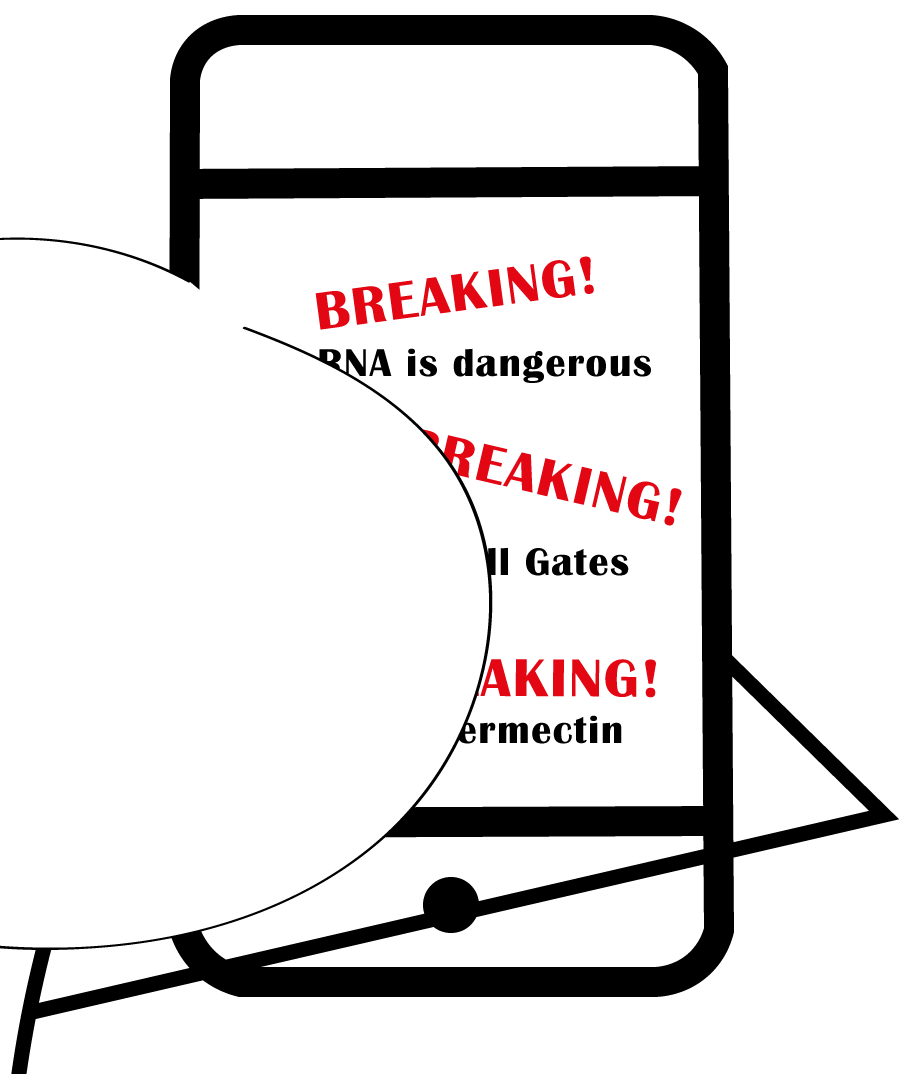
The COVID-19 pandemic showed just how important clear and accessible science communication is. In times of uncertainty, people turn to many different media for information. Trust in official sources was high at the beginning of the pandemic, but declined over time. Misinformation fuelled doubt, while apparently contradictory statements intensified the infodemic. Science is not a straight path to a final truth. On social media, however, dramatic claims spread faster than time-consuming fact-checking can keep pace with ever-changing statements taken out of context.
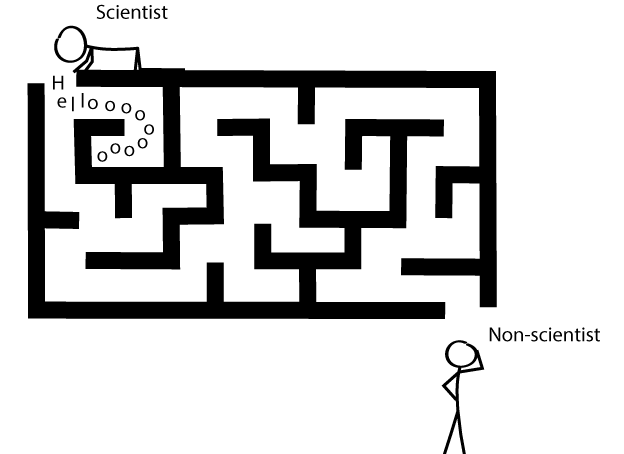
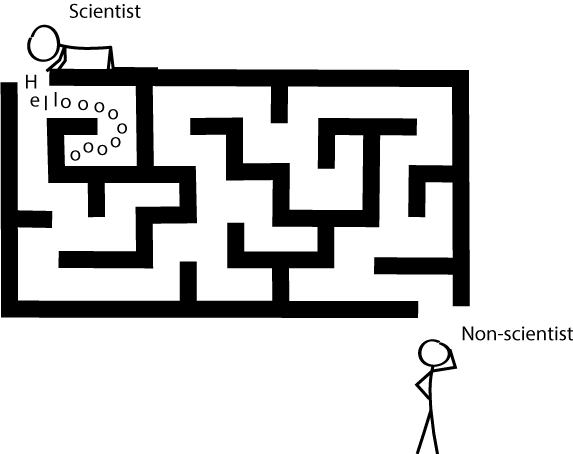
Effective science communication can counteract this. Yet we are still a long way from achieving it. At present, science communication resembles a maze with several barriers.
Barrier 1 – accessibility
Access to scientific information remains difficult for non-scientists, not least because of paywalls. Anyone researching a topic out of genuine curiosity can quickly reach a dead end when the relevant journal article is available only to paying readers. Despite progress towards open access, a substantial proportion of scientific work remains hidden behind paywalls. Open access should be the rule rather than the exception, allowing everyone with an interest in science to explore and understand it.
Barrier 2 – tailoring information to the audience
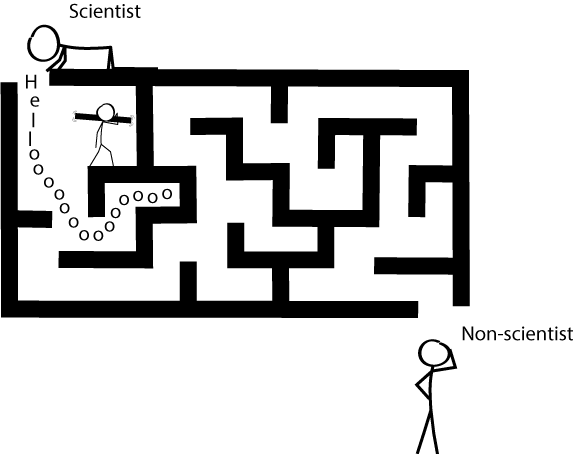
Peer-reviewed articles are indispensable for scientific exchange, but they often present a major obstacle to readers outside the field. Technical language, assumed prior knowledge and complex sentence structures can exclude even genuinely curious people. Scientists do not do this deliberately: most are trained to communicate with their peers, not with the wider public. Explaining science to another researcher, a six-year-old child or a sixty-year-old adult requires different language and different formats. Yet research still provides too little training, time and recognition for precisely this work.
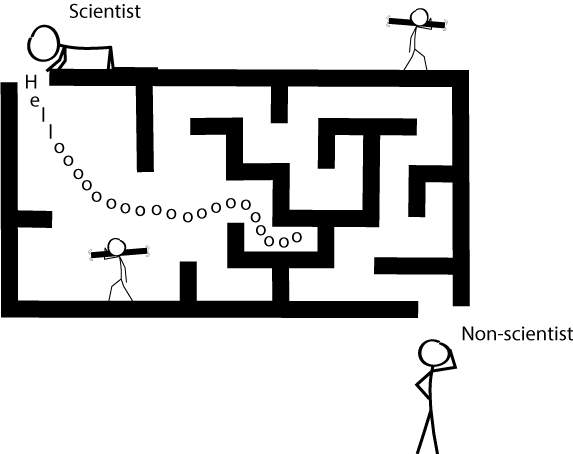
That makes the communication better, but it still does not reliably reach the wider public. So let us remove the next brick.
Barrier 3 – building trust in science
Trust shapes how we perceive and interpret information. It is essential to science communication, but can be damaged easily. The pandemic made this especially clear: new findings, corrections and remaining uncertainties were sometimes interpreted as contradictions or weaknesses. Trust is also influenced by existing beliefs, previous experience and the way information is communicated. Researchers should therefore be transparent about their methods, uncertainties and limitations. Uncertainty is not a flaw in science; it is part of a dynamic process of discovery. It is perfectly acceptable to say: ‘We do not know yet.’
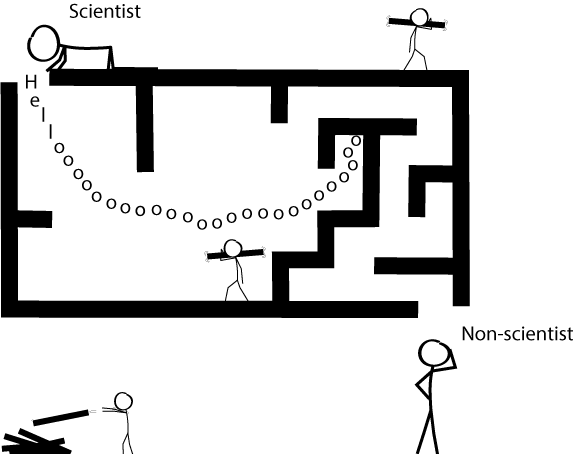
We are getting closer to the exit.
Barrier 4 – reaching younger generations
Many people – especially younger generations – now get their information from social media. Amid the sheer volume of content, distinguishing fact from fiction can be difficult. Sound science has to compete with emotional, oversimplified or misleading narratives. Making good use of modern media channels is therefore essential. Creating content that is accurate and engaging, however, requires expertise, time and resources. Involving science communicators from the beginning of a research project can help reliable information reach a wider audience.
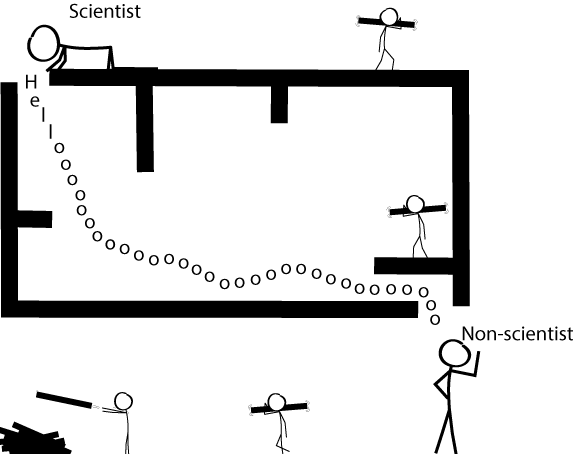
Can we do better?
Science communication still has a long way to go. The COVID-19 pandemic demonstrated how urgently it is needed – and revealed how often fascinating research is presented in a dull or unnecessarily complicated way. The same is true of antibiotic resistance. Even in wealthy countries, many people are unfamiliar with the term and its basic meaning, although the WHO considers antimicrobial resistance one of the major global challenges. As a One Health problem, it affects people, animals and the environment and requires contributions from society as a whole. Nevertheless, its central message still fails to reach large parts of the population.
Science must become better at communicating science – not tomorrow, but today. After all, research is intended to improve people's lives. For that to happen, people need to understand it and be able to take part in it.