Irresistin - Two are better than one
Irresistin
What are some of the characteristics a substance needs to have to be considered the perfect antibiotic? Ideally it is effective against gram-positive and gram-negative bacteria, resistant – attention, pun – to resistances, easy and cheap to produce, free from side effects and maybe even come with a backup mechanism of action to garantuee that the pathogen is effectively killed. Too good to be true? Not anymore!
Scientists recently reported of a new substance that meets all of these criteria: Irresistin.

Bow and Arrow
The characteristic that makes Irresistin stand out is it’s dual mechanisms of action. Therefore it can use two completely different and seperate mechanisms to attack the bacterium of choice. On one hand, the antibiotic does inhibit the folate (vitamine B9) metabolism. On the other hand it can attack the bacterial cell membrane. While targeting the folate cycle causes the bacteria to be inhibited in it’s DNA synthesis, attacking the bacterial cell membrane destroys the layer that protects the microorganism from its surrounding and keeps its inside conditions constant. No matter how Irresistin works in detail, both independent mechanisms lead to the same result: the bacterial cell being damaged.
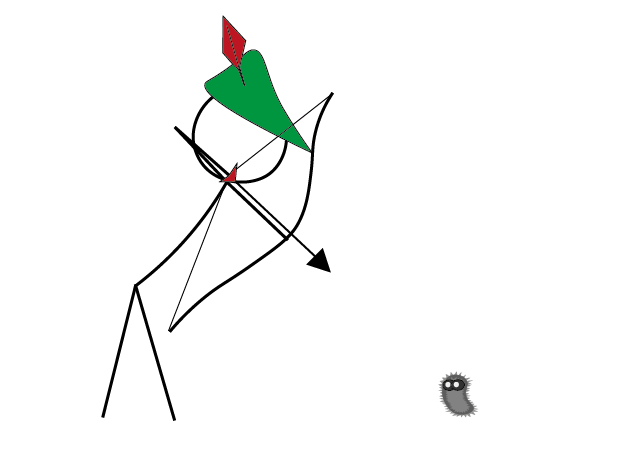
To make it easier to understand: here is Robin Hood (everything is easier to understand with Robin Hood by your side!)
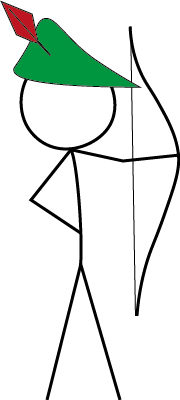
Robin Hood use bow and arrow to fight his enemies. With the help of the spiky arrowhead he can break the barrier of his target (human skin or armor; equivalent to the bacterial cell membrane). In most cases, the job is done with that.
However, even the best archer can miss his target (not saying Robin Hood ever did) and a grazing shot will hardly be enough to stop the enemy once and for all.

In this case, it can be handy, if the arrowhead was soaked in poison. This way, even a graze shoot can become a serious threat.
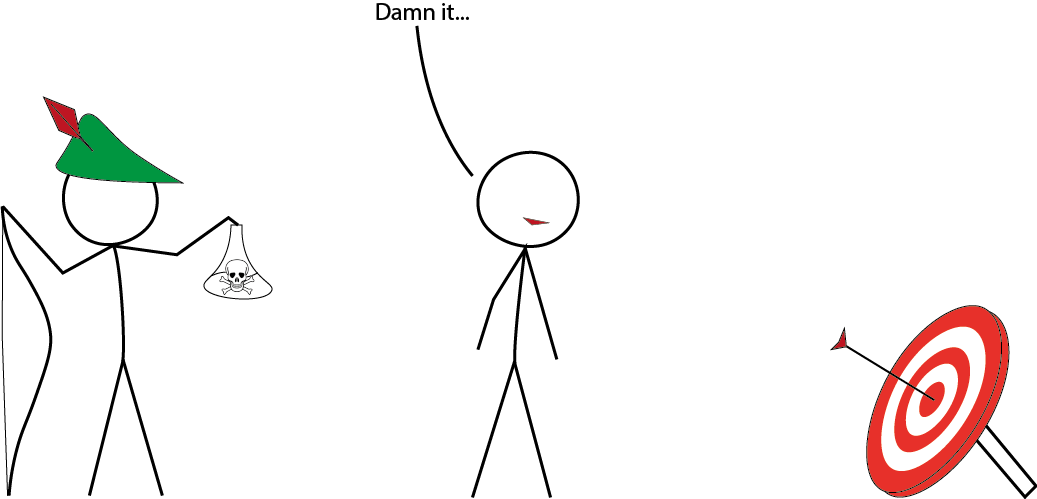
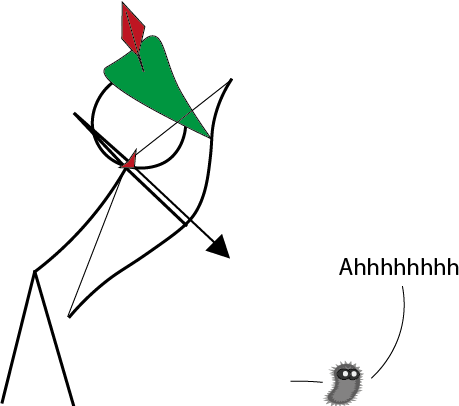
Basically, this is exactly what Irresistin does. It got sort of an arrowhead to destroy the bacterial cell membrane, but it also got its own sort of poison that attacks the folate synthesis – just for the case that destroying the cell membrane didn’t do the job already.
The ongoing fight
If you haven’t been impressed by now – we got you covered! Scientists so far couldn’t provoke any kind of resistance mechanisms in any test. However, this does not mean resistance will never occur in the future but at least they are unlikely.
All in all, the results of the study are convincing! Irresitins dual mechanism of action, the low rates bacteria seem to develop resistances against it (especially comparing it with other antibiotics), as well as its effeciancy against gram-positive and gram-negative bacteria are making it the big star on the horizon. Lab tests even proofed it does kill Acinetobacter baumanii – one highly resistant pathogen of the ESKAPE group!
Can it get any better?
If you want to read more, check out the original paper by James K. Martin II et al. 2020 (https://doi.org/10.1016/j.cell.2020.05.005)